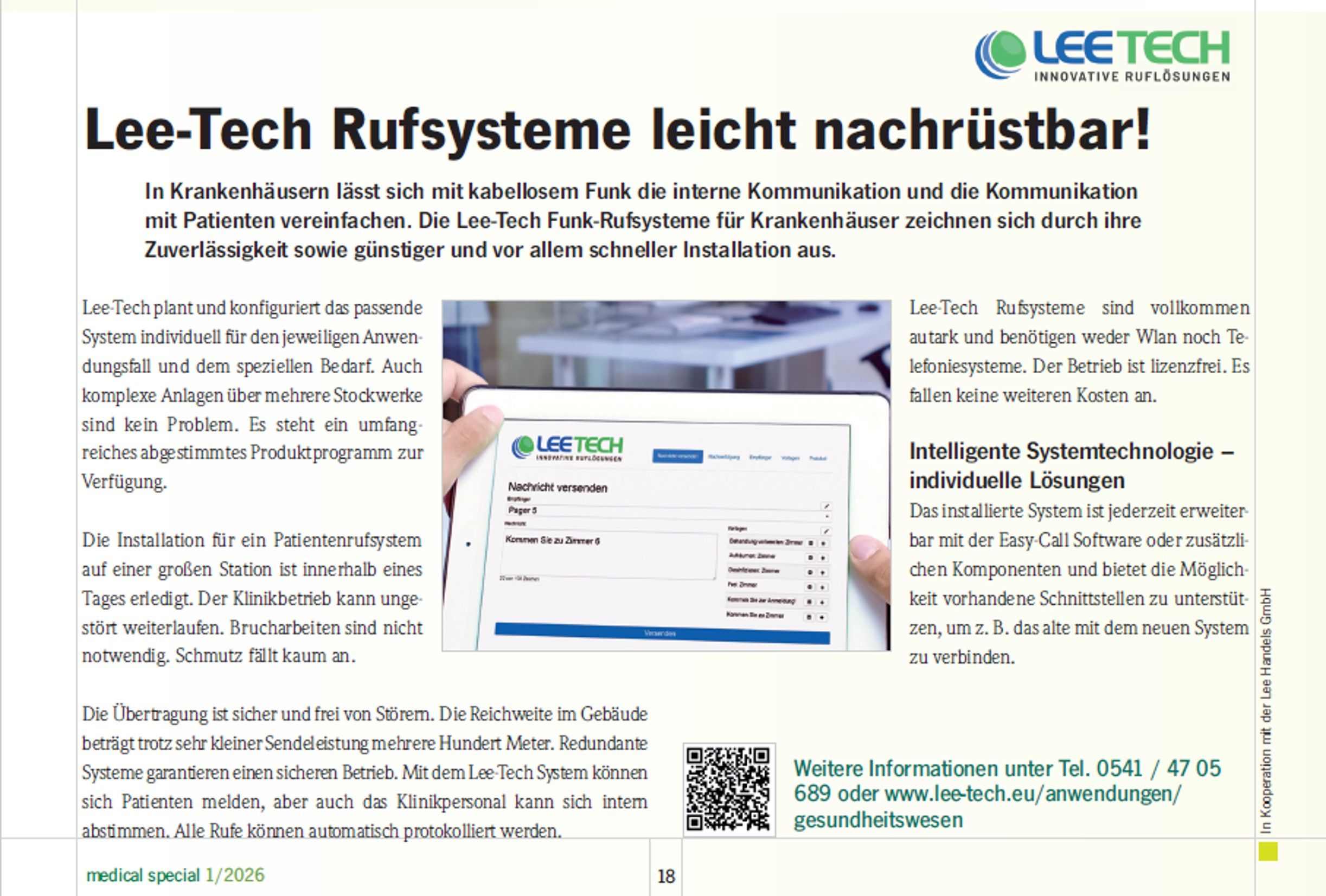
Why are pagers still relevant today?
Comparison of pagers and mobile phonesPagers have many advantages over mobile phones – especially where reliability and accessibility are important.
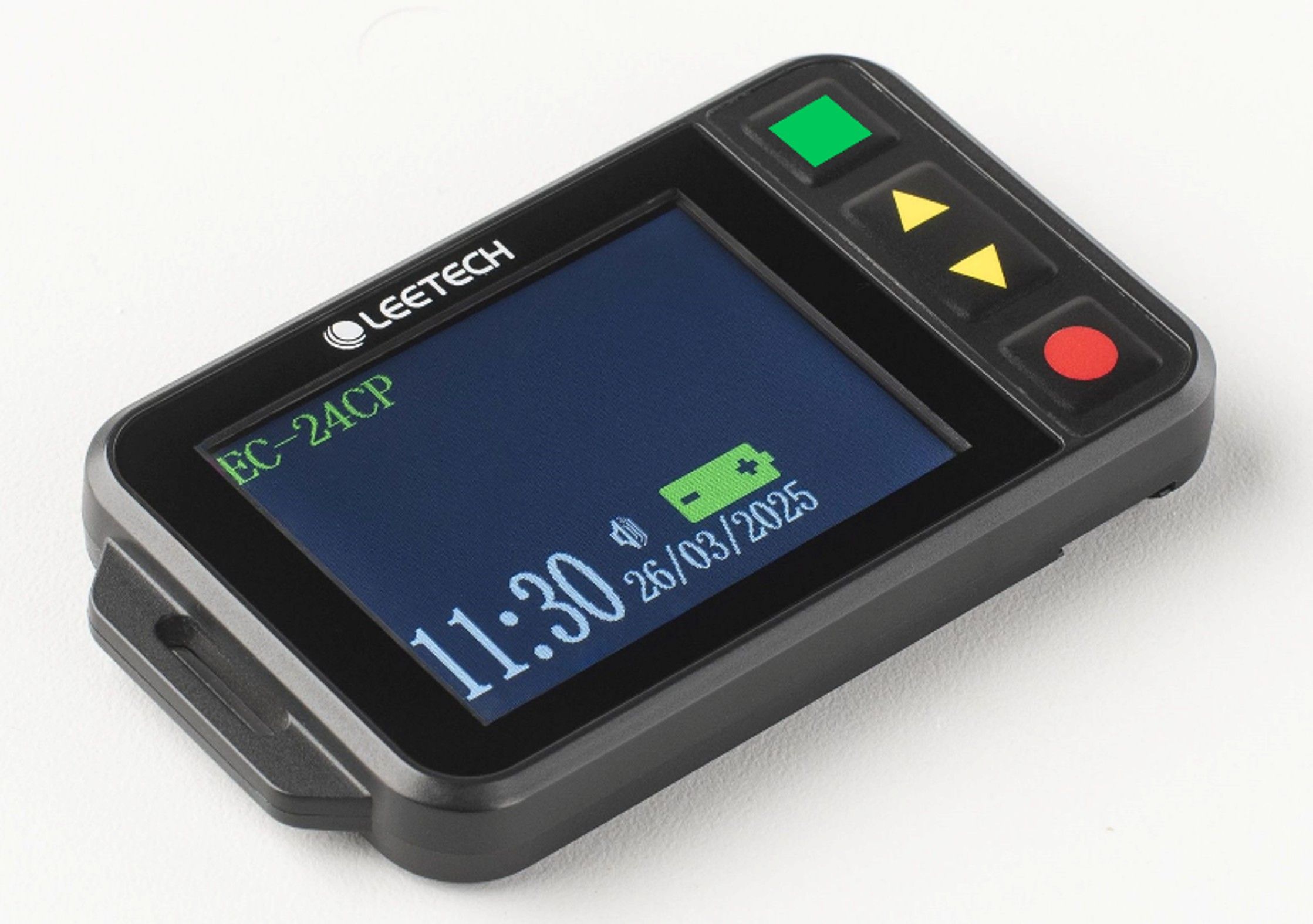
Pager or mobile phone: the most important differences
Advantage
Pager
mobile phone
🔋 Battery life
Often days to weeks
Usually hours to a few days
📶 Network load
Very robust in the event of many simultaneous alarms
The mobile network may be overloaded or unavailable.
🚨 Alert
Loud, dedicated alarm; hard to miss.
Calls/notifications can be muted.
🏢 Building penetration
Safe operation can be guaranteed.
Can be problematic in basements/buildings
🛡️ Robustness
The devices are very durable.
More sensitive and complex
🎯 Distraction
Virtually no additional functions
Apps, news, internet, etc.
💰 Costs
No ongoing costs
Device + mobile phone contract
🔐 Attack surface
Very limited
Vulnerable to cyberattacks
Articles worth reading in the healthcare/hospitals sector
Wireless patient call systems in hospitals
In Germany, hospitals are facing an "exceptional situation". Wireless patient call systems are very rarely used here, even though this cost-effective solution could greatly relieve the burden on hospitals facing financial challenges.
Many years ago, a DIN standard (DIN-VDE 0384.1) was created to develop a form of approval that would allow hospitals without their own
Technical expertise enables the use of appropriately tested systems. The recommendations are all based on wired systems. However, they cannot be applied to wireless call systems due to a lack of essential specifications.
The DIN standard essentially took two important points into account
- The basic description of how a nurse call system must be designed to reliably enable patient calls.
- The safety of patients from electric shocks, even in the event of extreme damage.
Unfortunately, the fact that wireless systems can perform the task just as reliably was never sufficiently considered. No system description was developed that would allow for neutral technical testing based on a standard. Therefore, the responsibility for implementation falls to the hospital operator.
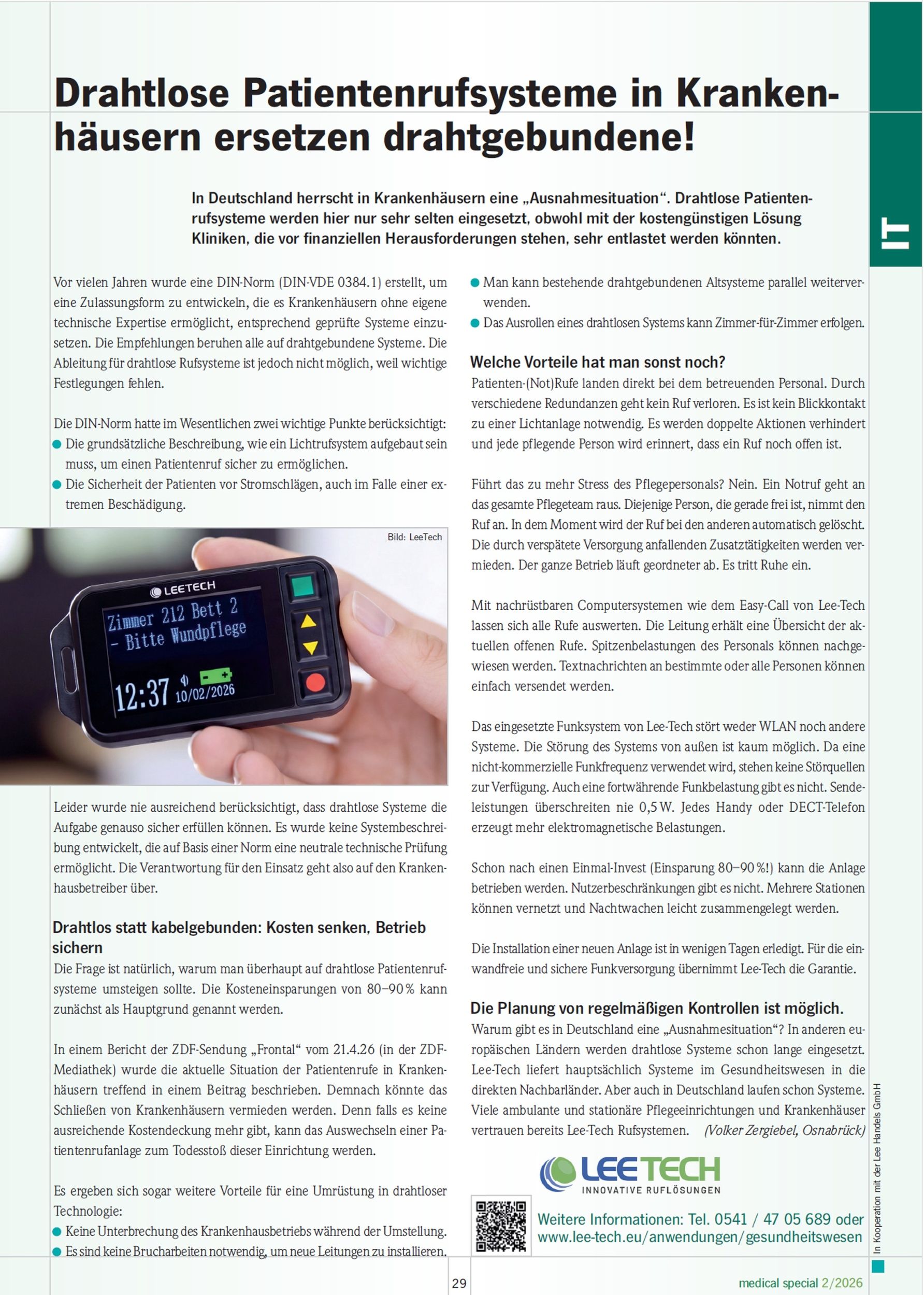
Wireless instead of wired: Reduce costs, secure operations
The question, of course, is why one should switch to wireless patient call systems at all. The cost savings of 80-90% can initially be cited as the main reason.
A report on the ZDF program "Frontal" from April 21, 2026 (available in the ZDF media library) aptly described the current situation regarding patient call systems in hospitals. According to the report, hospital closures could be avoided. If there is no longer sufficient cost coverage, replacing a patient call system could be the final blow to the institution.
There are even further advantages to switching to wireless technology:
- No interruption of hospital operations during the transition.
- No excavation work is necessary to install new lines.
- Existing wired legacy systems can continue to be used in parallel.
- The rollout of a wireless system can be done room by room.
What other advantages are there?
Patient (emergency) calls go directly to the care staff. Thanks to various redundancies, no call is lost. No visual contact with a light system is necessary. Duplicate actions are prevented, and each caregiver is reminded that a call is still pending.
Does this lead to more stress for the nursing staff? No. An emergency call is sent to the entire nursing team. The person who is currently available answers the call. At that moment, the call is automatically deleted for the others.
The additional work caused by delayed deliveries is avoided. The entire operation runs more smoothly. A sense of calm returns.
Retrofittable computer systems like Lee-Tech's Easy-Call allow for the analysis of all calls. The operator receives an overview of current open calls. Peak workloads for staff can be identified. Text messages can be easily sent to specific individuals or all callers.
The wireless system used by Lee-Tech does not interfere with Wi-Fi or other systems. External interference with the system is virtually impossible. Since a non-commercial radio frequency is used, there are no sources of interference. There is also no continuous radio frequency exposure. Transmission power never exceeds 0.5W. Every mobile phone or DECT phone generates more electromagnetic radiation.
The system can be operated after a one-time investment (saving 80-90%!). There are no user restrictions. Multiple stations can be networked and night shifts can easily be combined.
The installation of a new system is completed in just a few days. Lee-Tech guarantees reliable and secure wireless coverage.
It is possible to schedule regular checks.
Why is there an "exceptional situation" in Germany? Wireless systems have been in use in other European countries for a long time.
Lee-Tech primarily supplies healthcare systems to its immediate neighboring countries. However, their systems are already operating in Germany as well.
Many outpatient and inpatient care facilities and hospitals already trust Lee-Tech call systems.